
The Importance of Movement Breaks: After School Edition
Submitted by Zaira Miller-Shackleton, Lethbridge Sport Council
Life can become busy in the evening hours after children have finished school. Young students may find themselves working on homework, playing games on technology, or watching television. When we find ourselves getting into this habit, we invite a constant stream of sedentary behaviour into our lives. To overcome such habits, integrating movement breaks during these periods can help circulation, increase brain activity and improve executive functioning skills in order to promote healthy, balanced and positive well-being.
Write In The Air With Flair
Currently doing homework but still need that movement break? Maybe you’re trying to practice spelling, and the words just aren’t sticking. Try Write In The Air With Flair. Once standing, ask a question, maybe “spell the word sport”. Then, the child will spell the word in the air with their finger. The bigger the air writing, the more movement kids get!
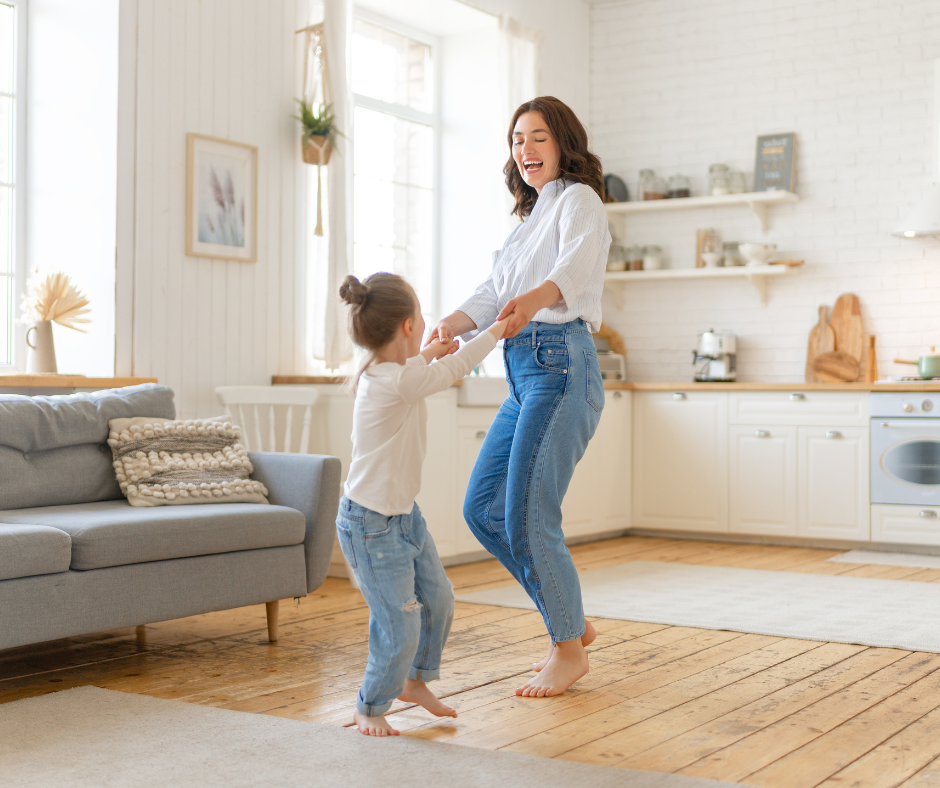
Spontaneous Dance Party
All this activity requires is some music of your choice and an awesome attitude! Begin playing some fun music from your phone, TV or speaker. Next, get up and dance! Jump around, laugh, be goofy, this is the time to shake out stress and reenergize your body. Try your best dance moves, maybe even learn a new dance!
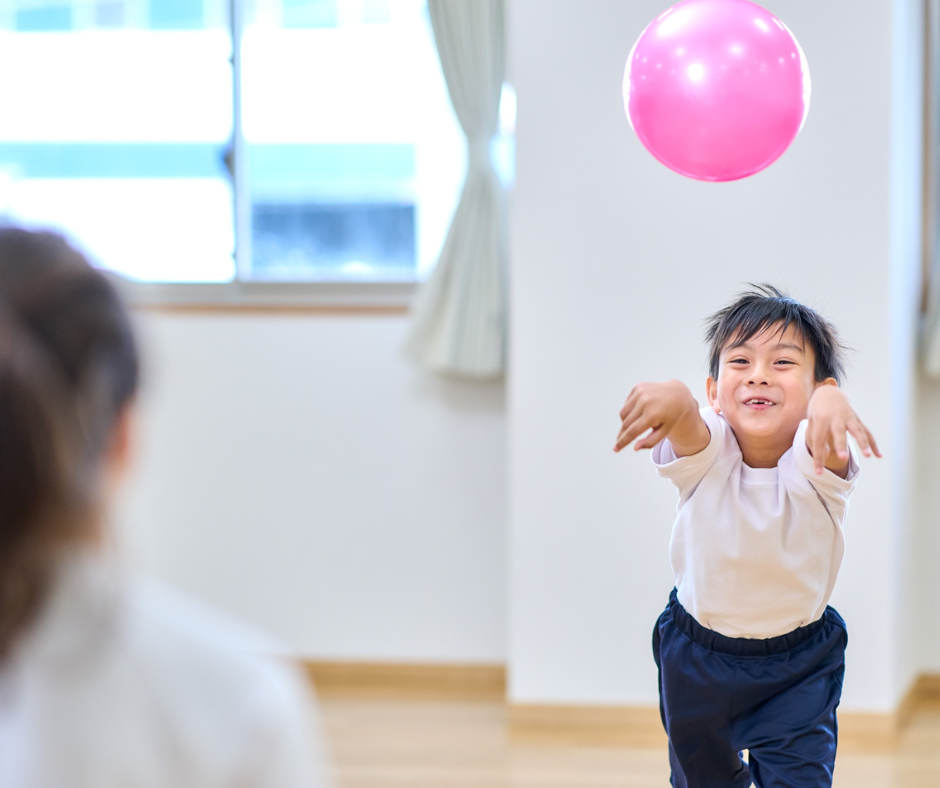
Ball Toss
With any size of ball that you have available, you can play Ball Toss as a great movement break that sharpens key fundamental movement skills. Toss the ball back and forth. Depending on skill level, the game can be made more challenging based on throwing speed, catching distance, or even one handed catches!
Why Active Breaks Make a Big Difference
Fun physical activity breaks foster the enjoyment of play, resulting in numerous mental and physical health benefits:
Boosts brain power - In a child's growing brain, moderate-to-intense physical activity can increase the release of dopamine, a happy booster! In turn, dopamine allows for immediate improvement in the child's mood, behavior and cognition. This is crucial to receive natural releases of dopamine as we see an immediate improvement on impulsive control and alertness. (Cornelius et al., 2017) (Silva et al., 2015)
Helps kids focus and think more clearly - With integrated and intentional movement, a child obtains significant improvement in their working memory, attention and executive functioning skills. (Li et al., 2023)
Supports social and emotional skills - Physical movement games not only help children’s cognitive functions, but also helps with social skills. Research shows that through these activities, the child gains more competence in social skills. (Mulrine at al., 2008)
Helps kids stay on task - Playing through movement helps reduce restlessness and wiggles, therefore decreasing off task behaviour. This helps the child regulate their own bodies to manage frustration, overstimulation or restlessness. (Sizemore, 2018)
How Much Should We Move Each Day?
Canada’s 24-Hour Movement Guidelines address routine habits that create a healthy, balanced day. These guidelines state that best health practices are reached by maintaining a minimum of 60 minutes of vigorous physical activity while spending several hours engaging in light physical activity. Sedentary behaviour, including sitting and screen time, should be no more than 2 hours per day. (Canadian Society for Exercise Physiology, n.d.)
References
Canadian Society for Exercise Physiology. (n.d.). Canadian 24-Hour Movement Guidelines for Children and Youth (5–17 Years). CSEP Guidelines. https://csepguidelines.ca/guidelines/children-youth/
Cornelius, C., Fedewa, A. L., & Ahn, S. (2017). The effect of physical activity on children with ADHD: A quantitative review of the literature. Journal of Applied School Psychology, 33(2), 136-170. https://doi.org/10.1080/15377903.2016.1265622
Mulrine, C.F, Prater, M.A., & Jenkins, A. (2008). The Active Classroom: Supporting Students with Attention Deficit Hyperactivity Disorder through Exercise. TEACHING Exceptional Children, 40(5), 16-22. https://doi-org.uleth.idm.oclc.org/10.1177/004005990804000502.
Silva A.P., Prado S.O.S., Scardovelli T.A., Boschi S.R.M.S., Campos L.C., Frère A.F. (2015). Measurement of the Effect of Physical Exercise on the Concentration of Individuals with ADHD. PLoS ONE 10(3): e0122119. doi:10.1371/journal. Pone.0122119
Sizemore, W. K.(2018). Movement Break Effects On Second Graders: An Action Research Study. (Doctoral dissertation). Retrieved from https://scholarcommons.sc.edu/etd/4854.