Fundamental Movement Skills: How Roving Gyms Support Active Children
This article is cross-posted on Lethbridge Sport Council
When children run, jump, kick, throw, or catch, they are doing more than playing. They are learning fundamental movement skills. Fundamental movement skills are not something children automatically know how to do. Just like learning to read or write, children develop these skills through practice, play, and a variety of experiences. Programs like Roving Gyms help children build these skills in a fun environment.
What Are Fundamental Movement Skills?
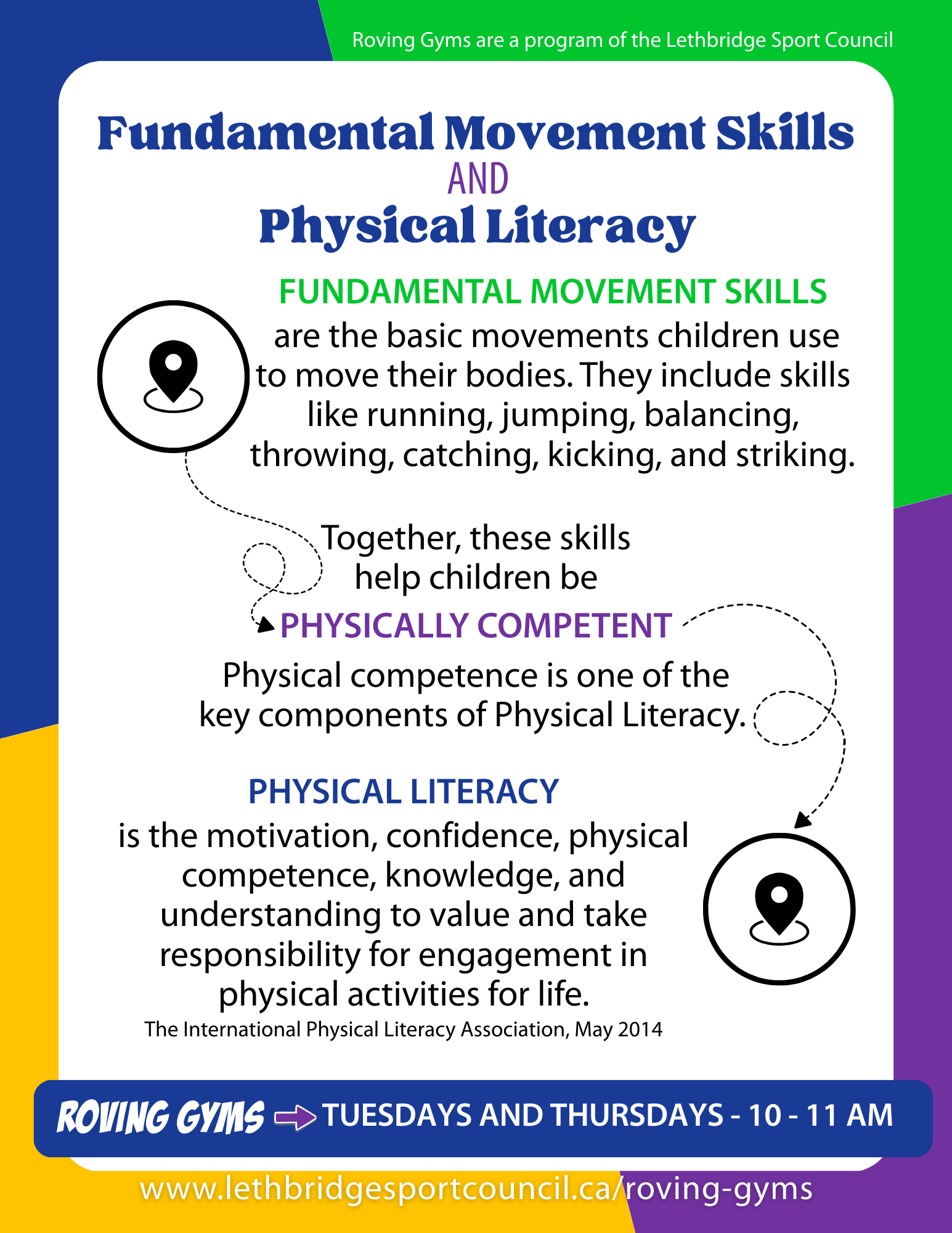
Fundamental movement skills are the basic movements children use to move their bodies and provide the foundation for participation in many forms of physical activity. (source: activeforlife.ca). They include skills like running, jumping, balancing, throwing, catching, kicking, and striking. Together, these skills help children be physically competent. Physical competence is one of the key components of Physical Literacy. “Physical literacy is the motivation, confidence, physical competence, knowledge, and understanding to value and take responsibility for engagement in physical activities for life.” (source: The International Physical Literacy Association, May 2014).
Key Skills That Build a Strong Foundation
Roving Gyms are designed to encourage young children to practice movement skills through play. We’ve identified key skills that are especially important as building blocks for sport and recreation.
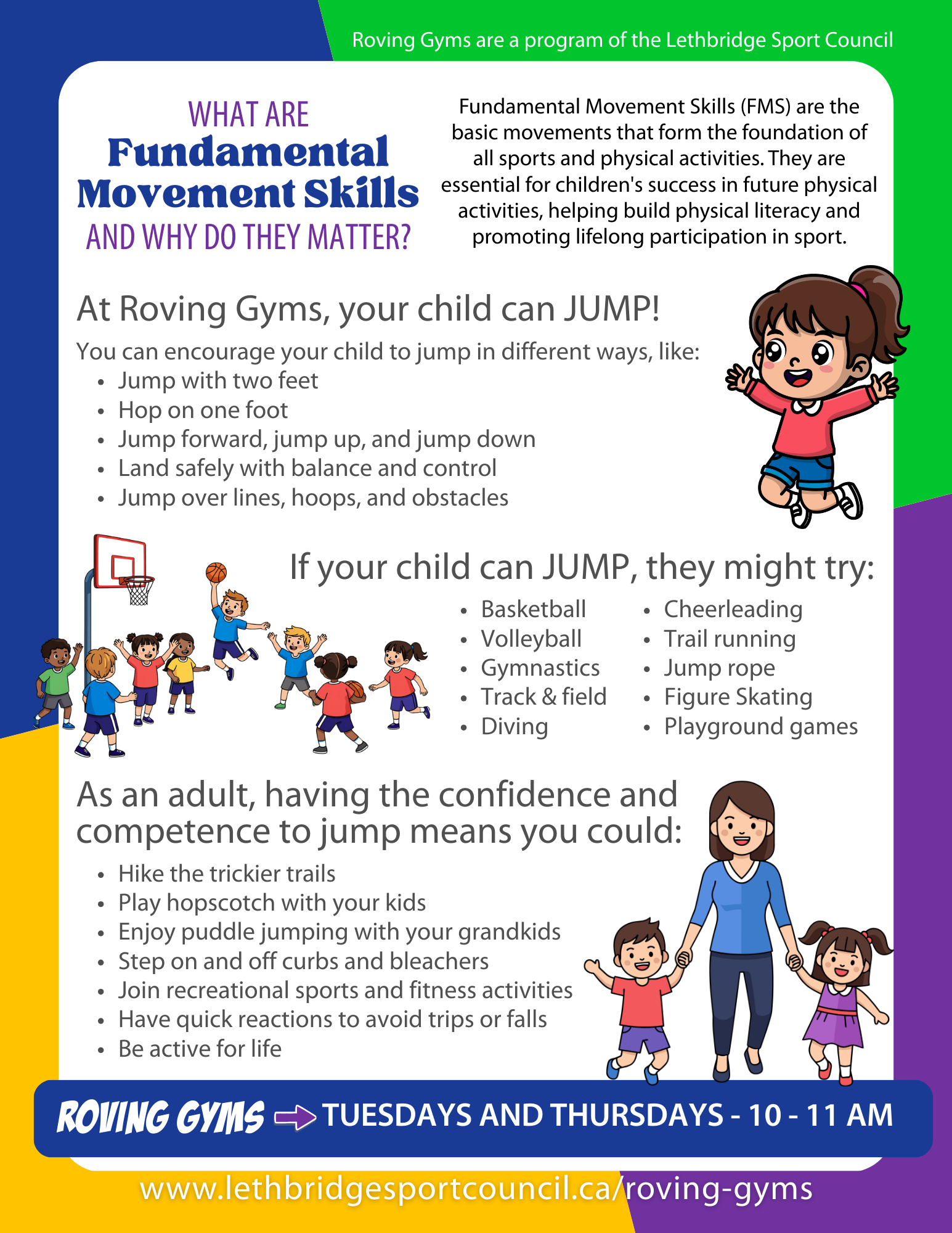
Jumping - Jumping helps children build strength, balance, and body control. It is used in sports like basketball, volleyball, gymnastics, skating, and track and field.
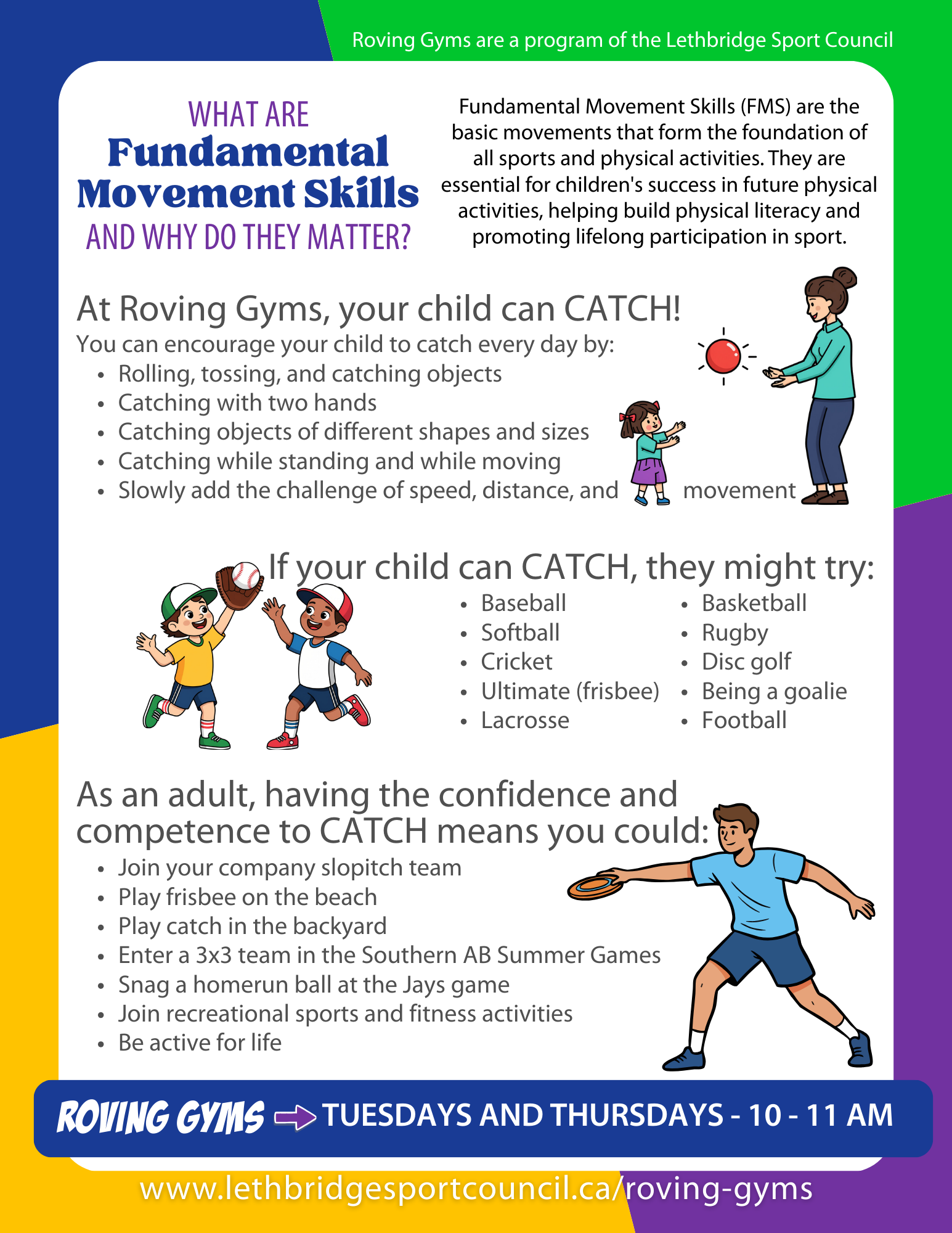
Catching - Catching develops hand–eye coordination and focus. It helps children succeed in sports like baseball, basketball, ultimate frisbee, and lacrosse.
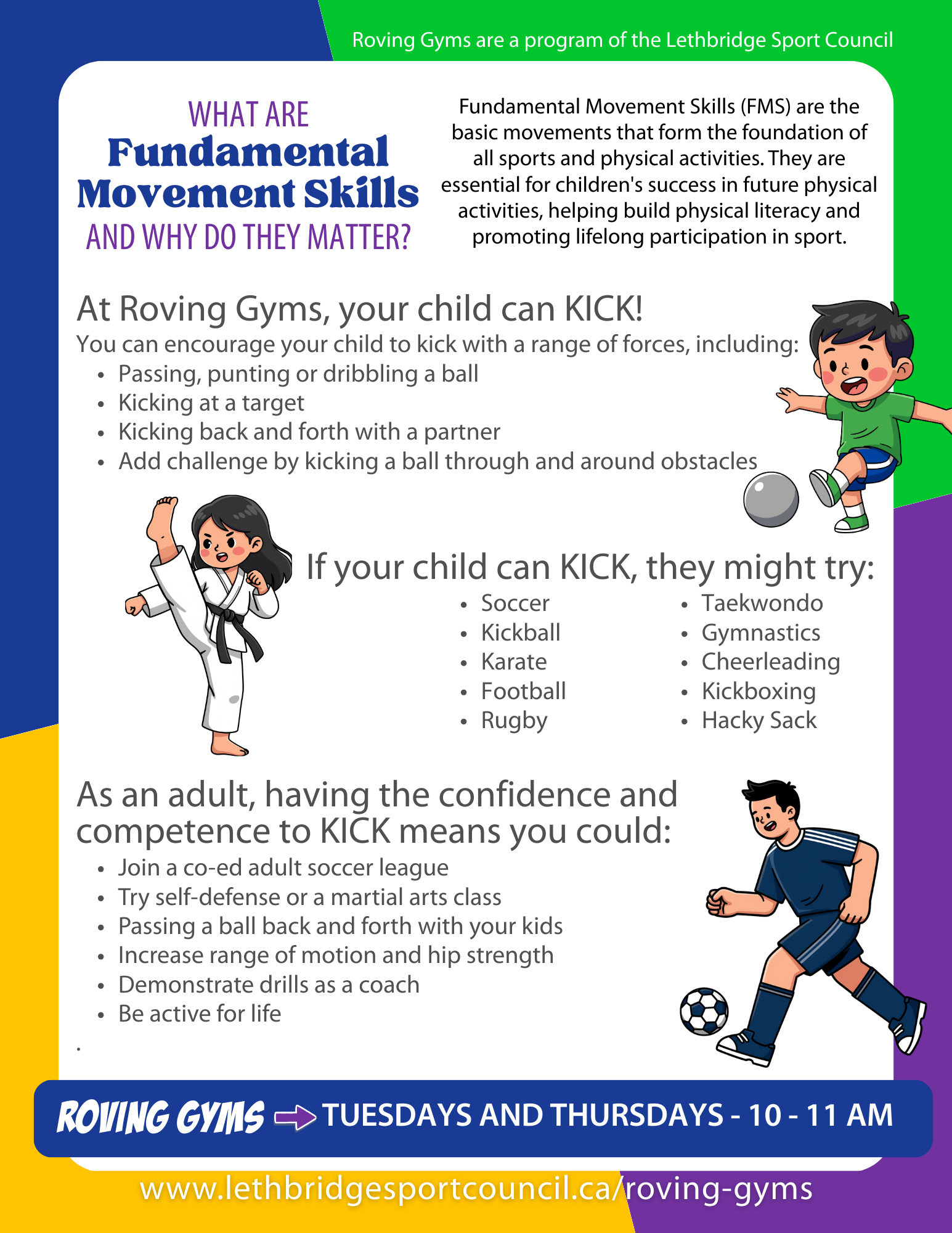
Kicking - Kicking builds balance, coordination, and lower-body strength. It is used in sports such as soccer, football, and martial arts.
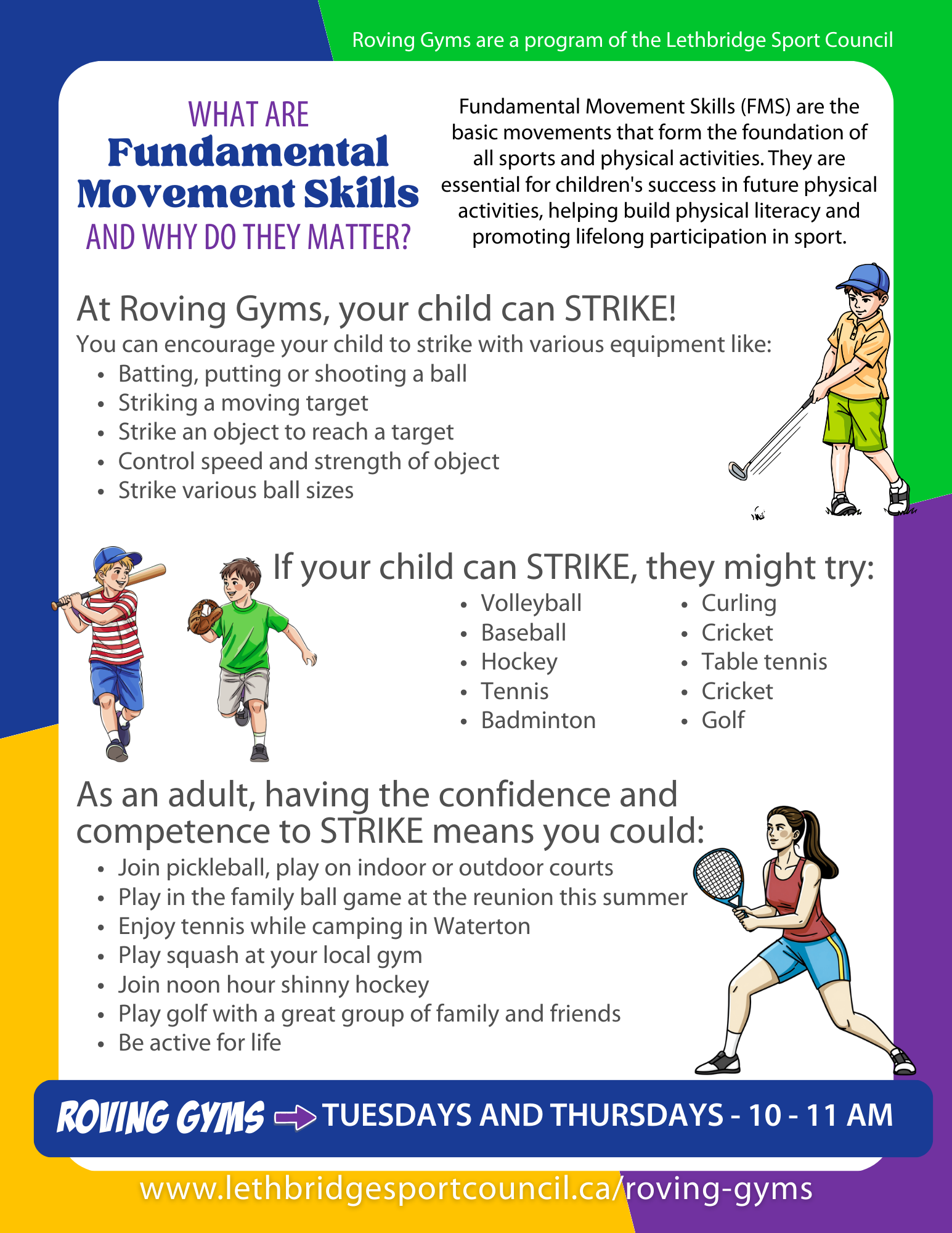
Striking - Striking helps children learn timing and control. Striking includes hitting or batting an object with a hand or an object, like a paddle or bat. This skill is important for sports like baseball, softball, hockey, tennis, and golf.
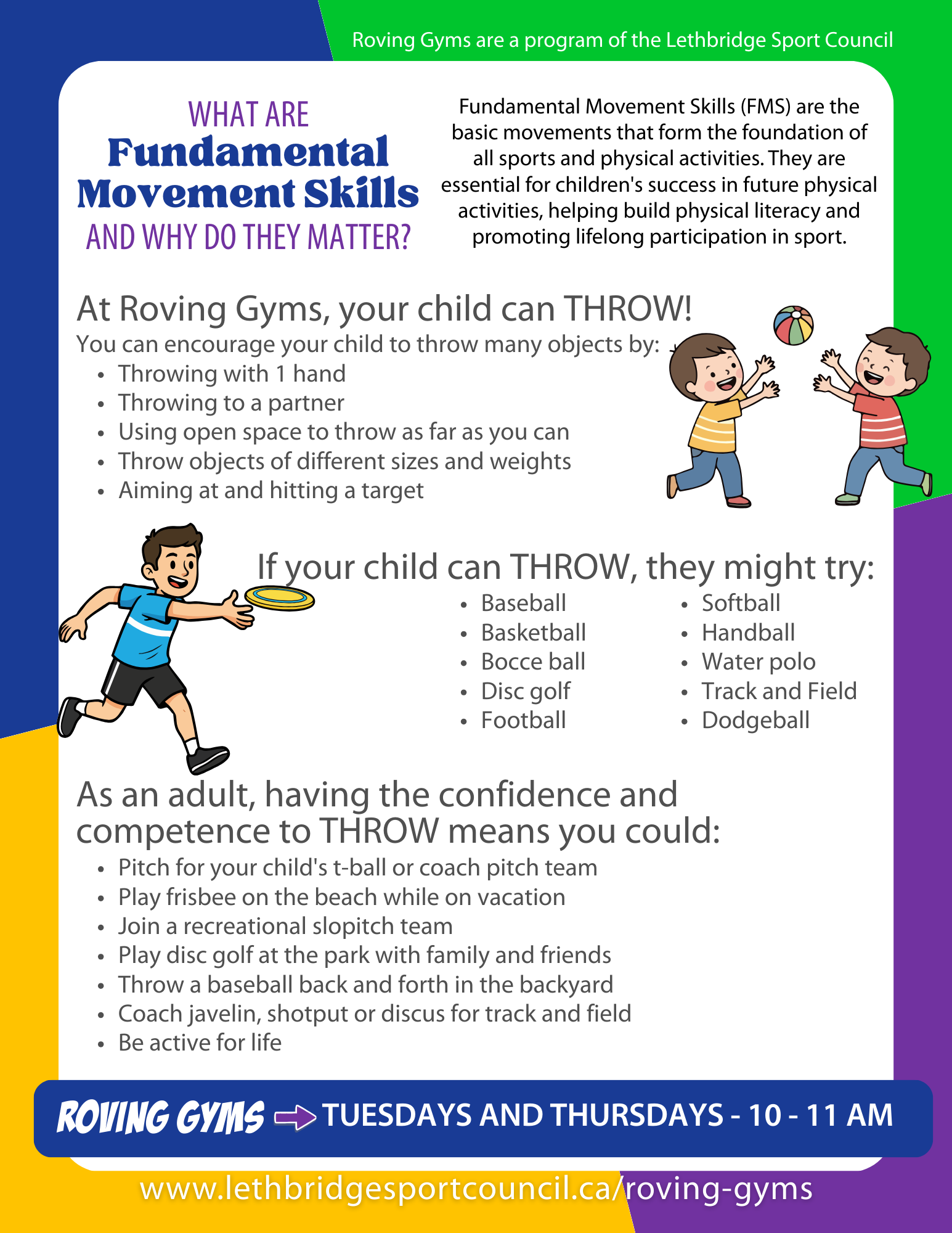
Throwing - Throwing builds upper-body strength and coordination. It is a key skill in sports such as baseball, football, handball, and basketball. Throwing is also part of many everyday games children play with friends and family.
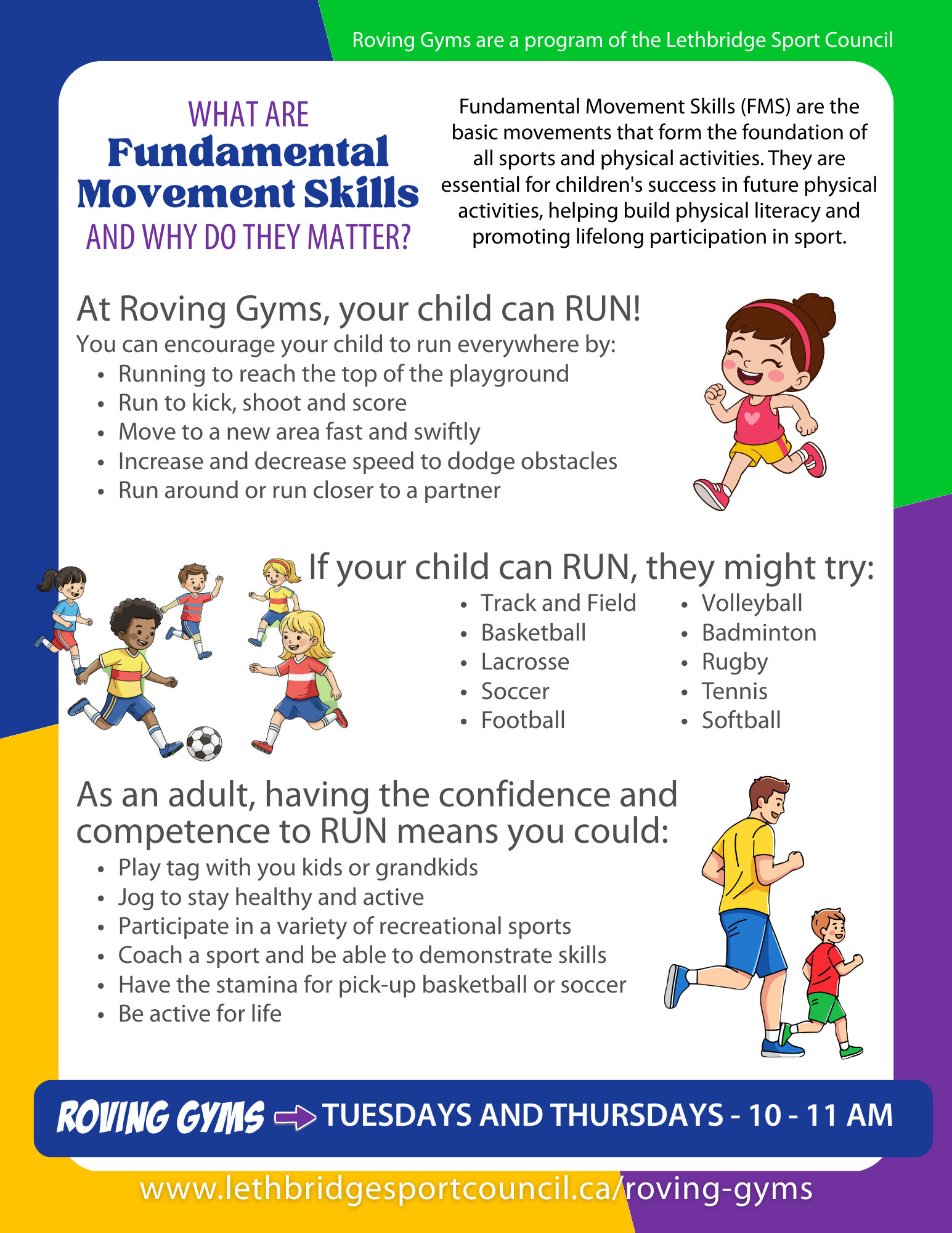
Run - Running is a quick movement where both feet briefly leave the ground. Running is essential for sports like basketball, baseball, rugby, and soccer.
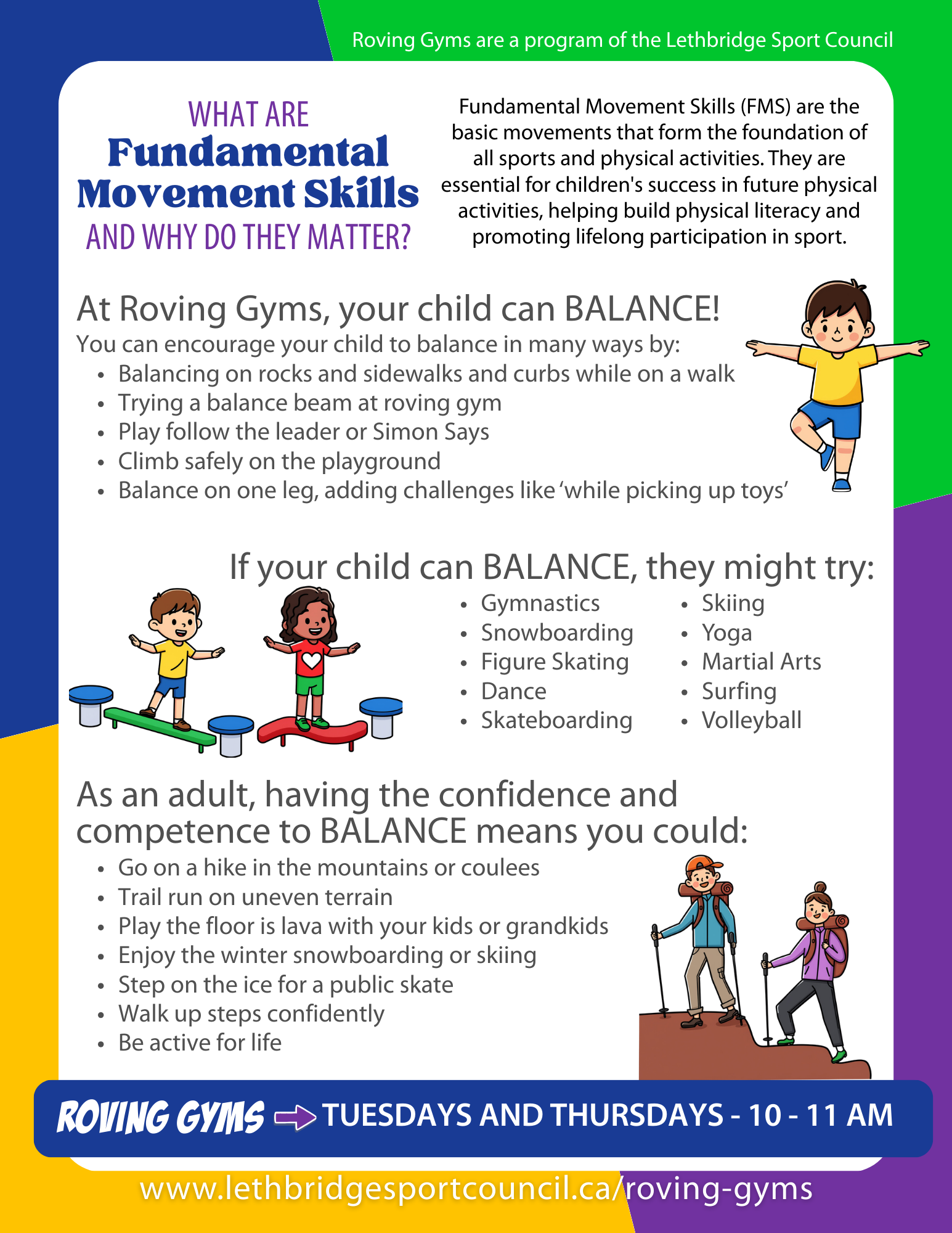
Balance - Balance is an essential part of everything we do. Balance starts developing early in life, as infants begin mastering skills such as rolling, sitting and walking. You’d be hard pressed to find a sport that doesn’t benefit from good balance, but a few sports rely on it, like gymnastics, skiing, martial arts, and skating.
How Roving Gyms Helps Children Develop These Skills
Roving Gyms uses play-based equipment to help children practice movement skills. Children are encouraged to move, explore, and try new things in a welcoming and inclusive environment. Activities are designed to be age-appropriate and fun, while also being challenging.
Rather than focusing on specific sports, Roving Gyms uses play to help children develop and practice movement skills. The Lethbridge Sport Council is a member of Lethbridge Plays, a coalition of local organizations that believe that play is an integral part of healthy human development. (lethbridgeplays.ca). This play-based approach supports confidence and helps children feel successful, no matter their experience level. Roving Gyms encompasses many of the 12 attributes identified in the Lethbridge Play Charter, including: fun, challenging, adaptable, inclusive, and limitless. You can learn more about the play attributes on the Lethbridge Plays website.
How Parents Can Support Skill Development at Home
Parents play a key role in helping children develop movement skills. The good news is that this does not require special equipment or formal training. You can help encourage lifelong movement habits by offering a wide variety of activities, and by keeping it fun. Some ideas include:
The Floor Is Lava (jumping, balance, planning movement)
Sock Toss or Laundry Basket Toss (throwing, aiming, catching)
Balloon Volleyball over a couch or piece of string (striking, tracking, jumping)
Target Practice with rolled-up socks or soft balls (throwing, kicking)
Obstacle Courses made with pillows, boxes, and tape (jumping, crawling, balance)
Follow the Leader or Simon Says with hopping, skipping, and jumping challenges
Clean-Up Toss—throw toys into bins or baskets (throwing, accuracy)
Shadow Games—copying jumps, kicks, and reaches (coordination and balance)
Freeze Dance with jumps and quick movements (control, body awareness)
The goal is not perfection. Encourage effort, celebrate progress, and keep activities fun. Giving children time and space to practice helps them build confidence and enjoyment.
Another way to support your child’s skill development is by letting them see you being active. If your child sees you enjoying being active, then they will see games, activities, and sport as a normal and worthwhile part of life. (activeforlife.ca)
Why These Skills Matter as Children Get Older
We know that being physically active later in life depends on feeling confident in an activity setting; and that confidence, as an adult, most often comes from having learned fundamental movement and sport skills as a child. (sportforlife.ca) In short, children who develop movement skills at a young age are more likely to feel confident when they reach school age and into adulthood. This confidence helps them:
Participate in physical education classes
Try new sports and activities
Stay active with friends
When children feel capable, they are more likely to join in and keep moving. This can lead to a lifelong love of physical activity, and in turn, increased health and wellness.
Building Skills for an Active Life
Not every child - or adult for that matter - will play organized sports, and that’s okay. Fundamental movement skills also support recreational sports, active recreation, and everyday movement. Roving Gyms help preschool-aged children build these skills.
Roving Gyms are just the first step on a child’s pathway in sport and physical activity in Lethbridge. As children grow, they can take part in programs like Give It a Try events or compete at the annual, grassroots, Southern Alberta Summer Games. Parents can also find local sport opportunities through our sport directory or explore activities at our annual sport “trade show,” SportFest, a one-day event featuring interactive exhibitors. From there, we support young athletes through the Southern Alberta Sport Leadership Conference, coaches through our Coach Development Conference, volunteers through the Sport Volunteer Hub, and community events through sport promotion and sport tourism initiatives. Local sport organizations also benefit from our member support program, helping build a strong, connected sport community in Lethbridge.
Learn more about Roving Gyms and other programs on the Lethbridge Sport Council website, www.lethbridgesportcouncil.ca